

HyperXSpace:
Intelligent Operations, Unified.
A high-fidelity digital-twin and simulation platform built on Unreal Engine 5—replicating real-world physics, logic, workflows, and environments to accelerate testing, training, and AI at scale.
Designed for certifiable, high-assurance use cases in aerospace, industry, public safety and beyond.
01
Photorealistic & Real-Time
UE5-powered visuals and virtual/HIL sensors deliver lifelike scenes for accurate testing.
02
Beyond Visualization
HxS models physics, interactions, logic, and workflows for true digital-twin fidelity.
03
Hybrid Simulation Power
Combine physics-based twins with agent-based (ABS) and discrete-event (DES) simulations.
04
Synthetic Data at Scale
Generate diverse, balanced datasets—including edge cases—for ML training and validation.
05
AI Feedback Loop
Every simulation improves your models; every model improves your simulations.
06
Edge-Ready Deployment
Hardware-optimized inference (FPGA-accelerated) for real-time decisions in the field.
Value Proposition
Why HxS


01
Plan & Orchestrate
Define workflows, missions, and parameters in the Orchestrator. Toggle SIL/HIL modes as needed.
02
Simulate in 3D
Run photorealistic digital twins alongside ABS/DES for operations, logistics, and swarm behaviors.
03
Generate Synthetic Data
Produce visual and sensor outputs for normal and rare scenarios (including high-risk edge cases).
04
Train & Validate Models
Use the AI/ML environment for versioned, traceable training with explainable model outputs.
05
Deploy to the Edge
Push optimized models to FPGA clusters and field devices for low-latency, power-efficient inference.
06
Close the Loop
Feed results and insights back to the Orchestrator for continuous improvement.
How It Works
The Digital Thread: Plan → Simulate → Generate → Train → Deploy → Improve


01
Orchestrator (Command & Control)
Workflow-centric planning and execution with real-time reconfiguration and AI-driven recommendations.
02
Hybrid Simulation Environment
UE5 photorealism with physics-accurate twins, virtual/HIL sensors, and combined ABS/DES for complex operations.
03
AI/ML Development & Agentic Environment
Continuous learning pipelines, lifecycle management, and domain-specific small language models (SLMs) that assist operators.
04
Data Engineering & Lakehouse
Unified storage for mission logs, sensor streams, and simulation results—fully version-controlled and traceable.
05
FPGA Cluster for Hardware-Optimized Execution
Quantized/pruned models for low-latency, power-efficient inference with HIL validation.
06
Operational Workflow (Closed-Loop)
End-to-end digital thread from workflow definition to deployment, with insights feeding back to planning.
Core Components

01
Mission Planning & Rehearsal
Design, test, and rehearse high-stakes operations virtually.
Outcome: Faster planning cycles and safer field execution.

02
Autonomy & Robotics (UxV Swarms)
Train, coordinate, and validate multi-agent systems in complex environments.
Outcome: Robust autonomy with explainable performance.
03
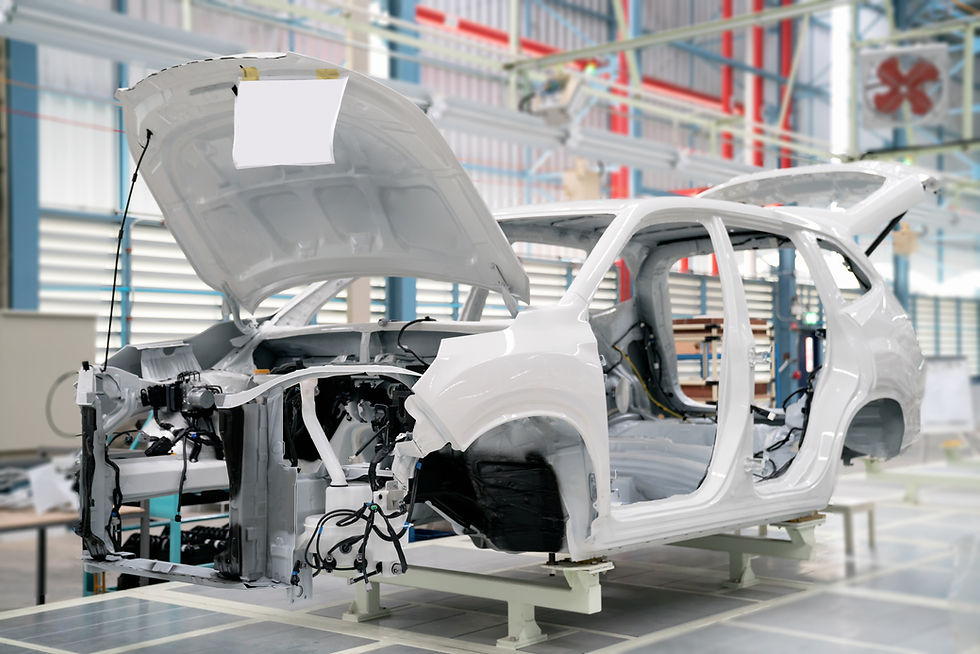
Predictive Maintenance & Industrial Workflows
Stress-test processes, resources, and schedules with DES/ABS.
Outcome: Higher uptime and optimized OPEX.

04
Public Safety & Resilience
Practice rare or risky scenarios without real-world exposure.
Outcome: Better preparedness, lower training risk.

05
AI Model Training & Evaluation
Generate balanced datasets for rare events and edge cases.
Outcome: Stronger, fairer, more reliable models.

06
Infrastructure & Energy
Simulate resilience, topology changes, and emergency responses.
Outcome: Reduced downtime and accelerated recovery planning.